Studies have shown that around 70 percent of equipment or machinery loss of use is due to surface degradation. Of that 70 percent, 20 percent of replacements are a direct result of corrosion and the other 50 percent are due to mechanical wear. The most common causes of this corrosion and mechanical wear are dirt and moisture originating outside the machine. When you have moisture in your lubricant or hydraulic fluid, a myriad of negative effects start occurring. For example, moisture leads to corrosion, which in turn leads to particulate contamination. Moisture can also change oil viscosity, deplete additives and cause sludge formation.
Before we can define a desiccant breather, we need to understand what a desiccant is. A desiccant is defined as a hygroscopic substance (material that attracts and holds water molecules) that induces or sustains a state of dryness in its vicinity. Have you ever opened a box of new shoes or a packet of beef jerky and seen those little packets labeled “do not eat”? Those packets contain silica gel, which is a desiccant. Other types of desiccants are used as well.
Desiccant breathers (Figure 1) are multi-tiered devices installed on your machines to prevent the entry of two crucial contaminants: moisture and particles. Equipment like gearboxes, pumps and reservoirs must “breathe” when air in the headspace expands and contracts due to temperature changes and oil level changes in the case of hydraulic systems, incoming fluid displaces air or when hydraulic components are working. Each time equipment “breathes,” dirt, debris and moisture are brought in, contaminating the lubricant and damaging the equipment over time. Since we know at least half of lubricant contamination comes from outside machinery and most machines are designed to “breathe,” it’s a good idea to stop these contaminants at the source. Enter desiccant breathers.
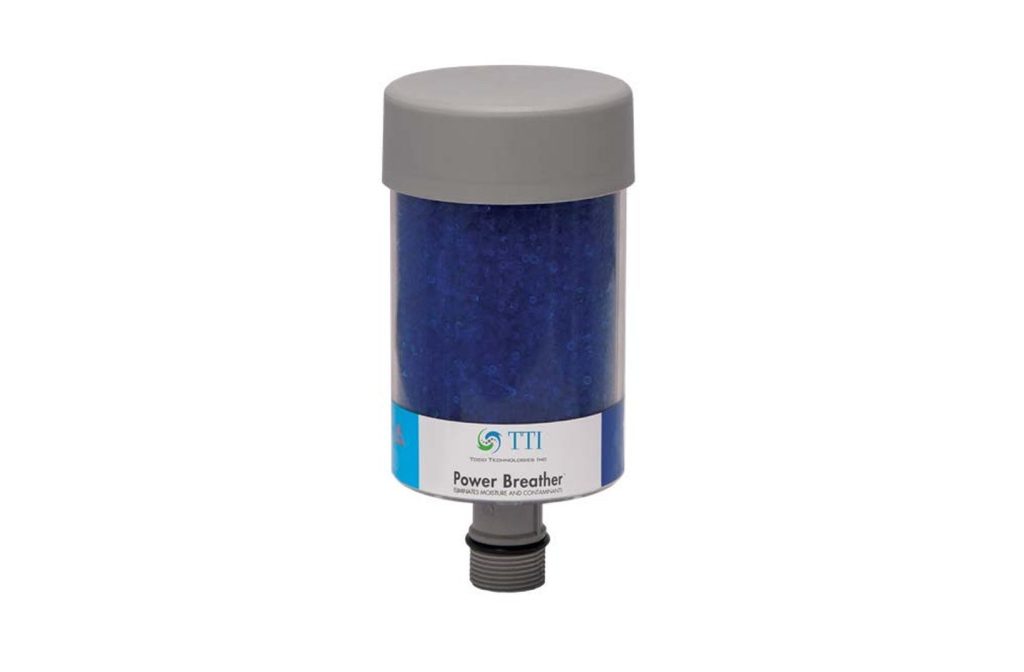
Desiccant breathers vary in design and construction. Some, like our line of desiccant Power Breathers at TTI, work by using a three-stage design to help ensure the interior of your equipment stays clean and dry. Incoming air is cleaned and dehydrated through an initial solid particle filter, a container of silica gel and another solid particle filter. At TTI, we use Dual Zone Microglass media in several of our consumable and Rebuildable Power Breathers to offer industry leading dirt holding capacity in your breather. As our diagram (Figure 2) shows, desiccant breathers work like this:
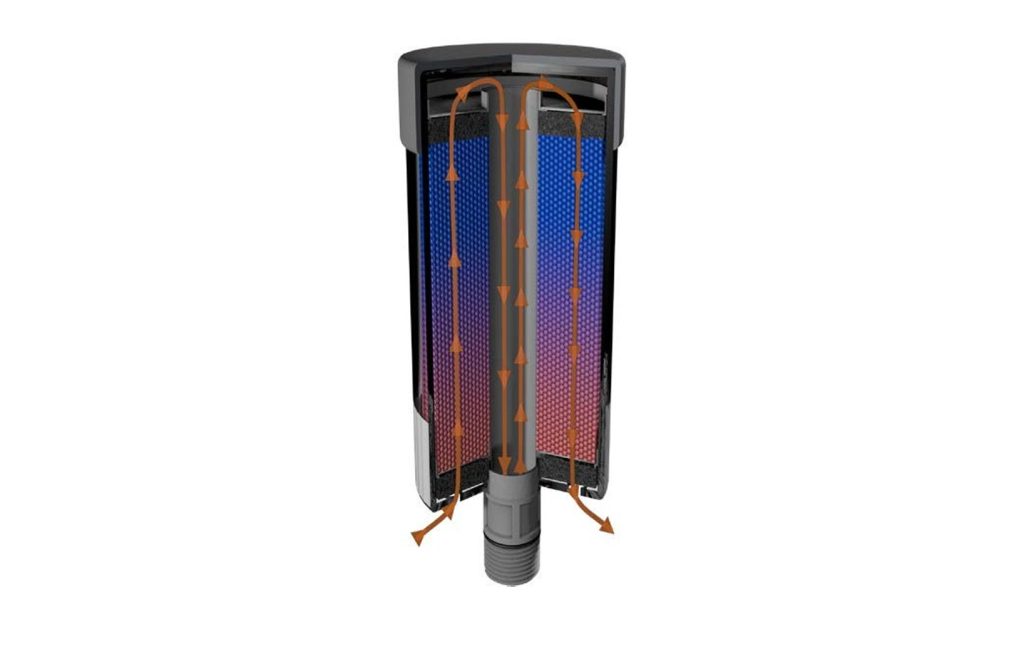
As the machine exhales, air travels through the desiccant breather in reverse, or may purge directly to the atmosphere depending on the breather’s design. As the breather’s silica gel becomes absorbed with moisture, it turns a different color. Color varies depending on the brand of desiccant breather, but at TTI, the US Power Breather line starts blue and turns pink when saturated. This is how you’ll know it’s hydrated and time to replace the desiccant.
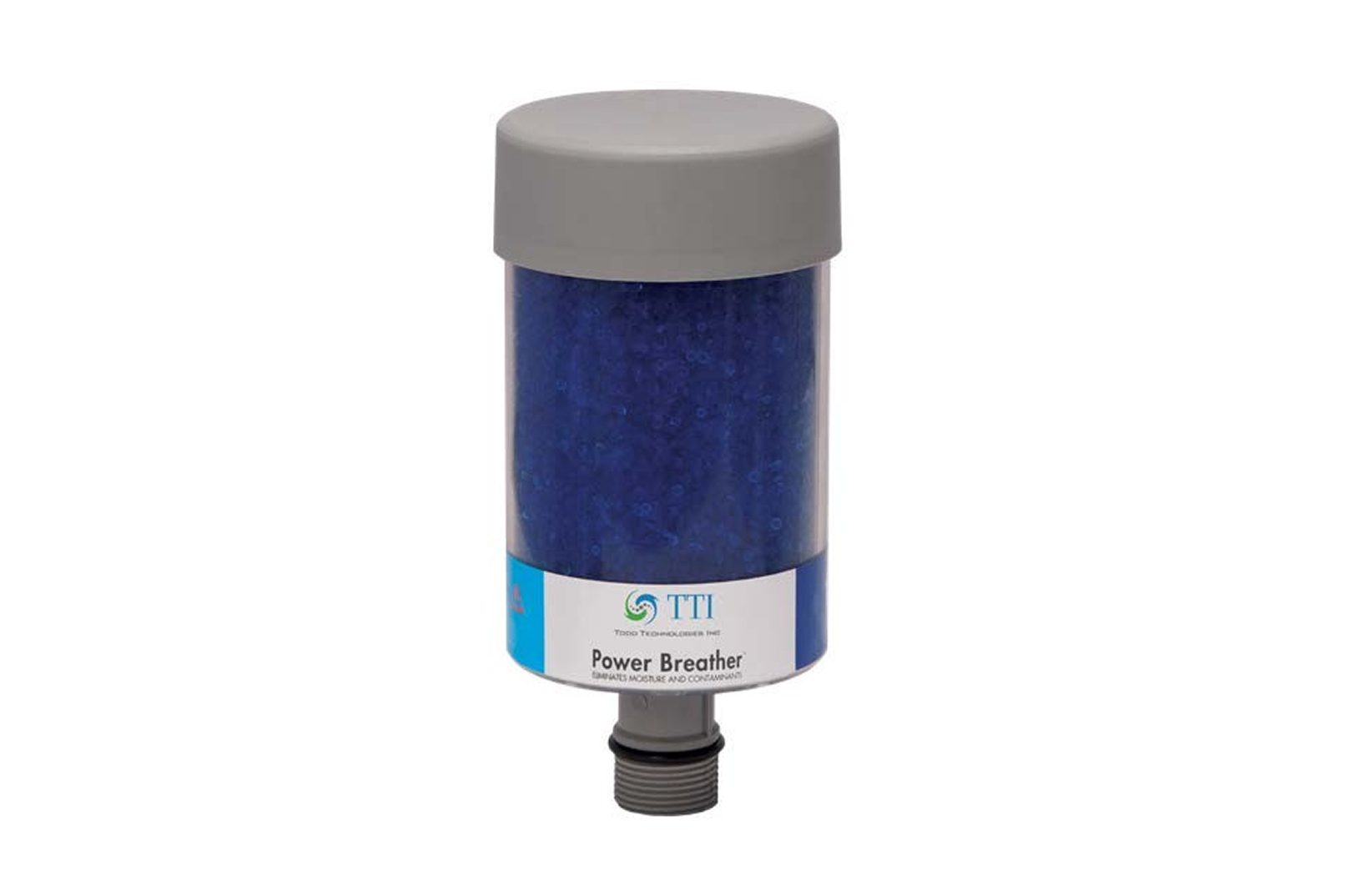
Many desiccant breather models implement components to help extend the life of the breather. Our foam poly urethane layer on the bottom of the breather absorbs any oil vapor or oil splashing up that could get into the silica gel of the desiccant breather, shortening its lifespan. In addition, our TTI Power Breather-CV (Figure 3) uses check valves to help extend the life of the desiccant by providing a closed system until airflow is needed. In other words, using a desiccant breather with an intake check valve allows airflow into the breather only when the differential pressure between the atmosphere and fluid reservoir exceed a certain threshold.
In addition to the standard-style Power Breather and Power Breather CV (check valve) options, other add-ons you see may include:
A common question that comes up when discussing how desiccant breathers work is how long do they last? Most breathers last anywhere from three to six months if properly sized. The answer depends on four variables:
Intake frequency and volume of breathing refers to how much moist air passes through the breather. Each time a piece of equipment breathes, water vapor is retained in the silica gel, gradually shortening the life of the breather. The amount of water the breather can hold directly relates to the amount of silica gel in the breather. Most desiccant breather manufacturers have a chart with the maximum water capacity for each breather, so you’ll know how much moisture the breather can retain before reaching the end of its life. At TTI, we use industry-leading power gel with greater moisture holding capacity, offering an average of 20% greater lifespan over the competition.
Humid work environments tend to shorten the lifespan of a desiccant breather. As the humidity increases, the silica gel reaches its maximum moisture-holding capacity faster. Once this capacity is reached, no more moisture can be removed from incoming air, meaning it is time to replace your breather.

There are multiple factors you need to consider before choosing a desiccant breather:
• What is the environment?
• What is the application?
• What is the average and maximum airflow rate?
• What is the maximum reservoir/gearbox fluid capacity?
• Is the operation intermittent or continuous?
• What is the outflow rate of fluid leaving the system?
• What is the inlet/vent port connection size and configuration?
Your machine’s operating environment should be considered as it pertains to the amount of contamination. For example, severe environments like those with water spray or large amounts of dirt should use a desiccant breather that can hold higher amounts of ambient contamination. Severe environments might require breathers with check valves to help prolong their lives.