

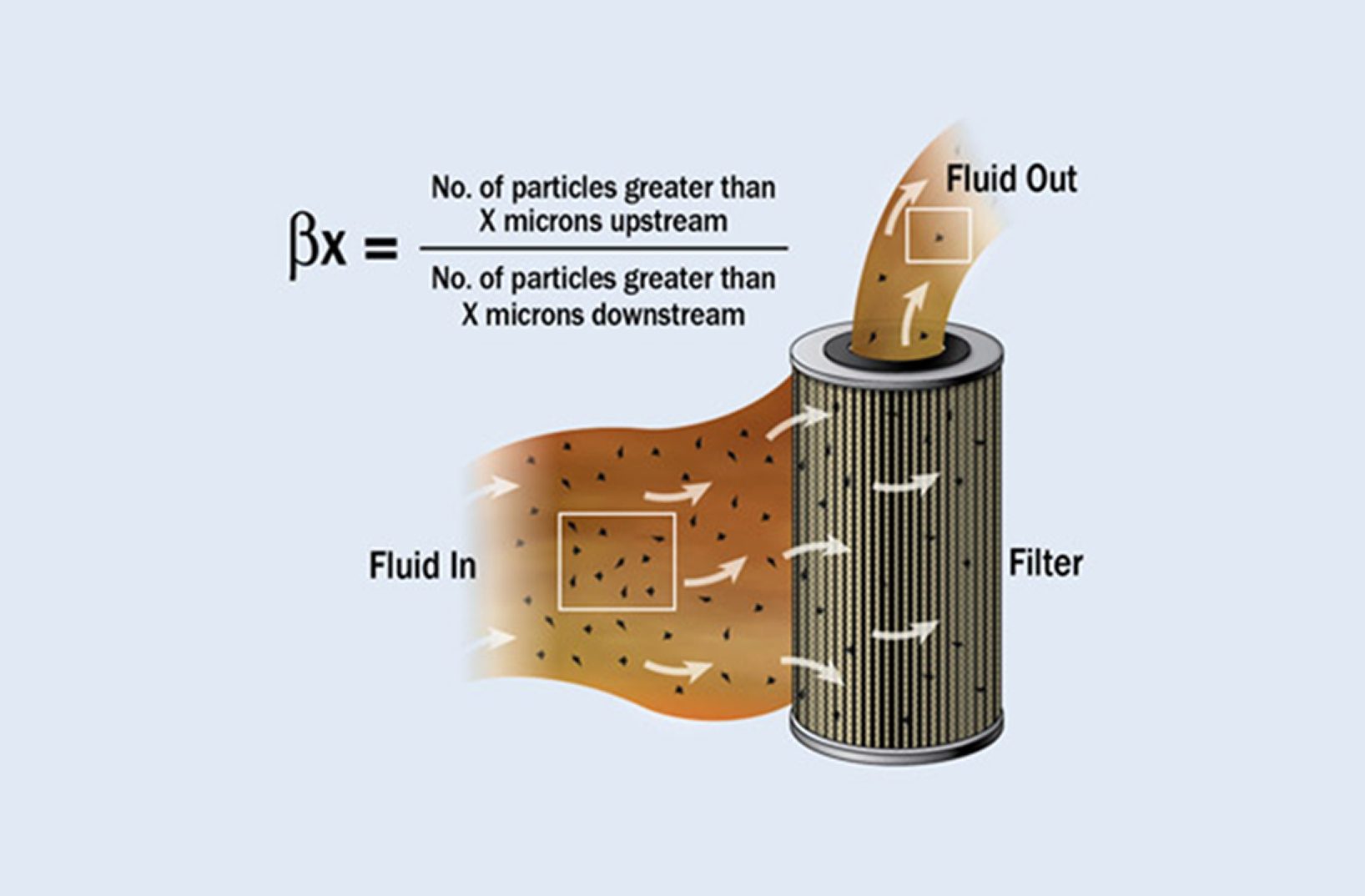
Often referred to as beta ratings, beta ratios are used to determine a liquid filter’s efficiency to remove particles of a specific size and larger. It is important to note that these efficiencies are not single pass but multiple pass results over the life of the filter. Filter life is defined in terms of differential pressure. As a filter clogs with particles, the pressure between the dirty side and clean side increases, creating a difference between the two. We refer to this as differential pressure. Particle counters are used before and after the filter to measure levels of contamination at predetermined micron ranges. The results are calculated to determine the beta ratio. The process is governed by international standards organization, ISO 16889.
The graphic above illustrates this calculation.
The beta ratio can also be communicated in percent of efficiency. To illustrate, assume upstream (dirty side) particle counter counts 100,000 particles of a 10 micron and larger, and the downstream (clean side) particle counter measures 50,000 10 micron and larger. The beta value for that filter would be 2 or 50%.
Manufacturers of filter elements using glass media, also known as microglass filter media, commonly use Beta Ratio rating of 200 or 1,000. This can be confusing because both values are communicated as “absolute”. Referring to the table above, the difference between Beta 200 and Beta 1000 is a minuscule 0.4%. The difference in Beta numbers looks impressive for marketing purposes, but in reality it is hardly measurable in real life application.
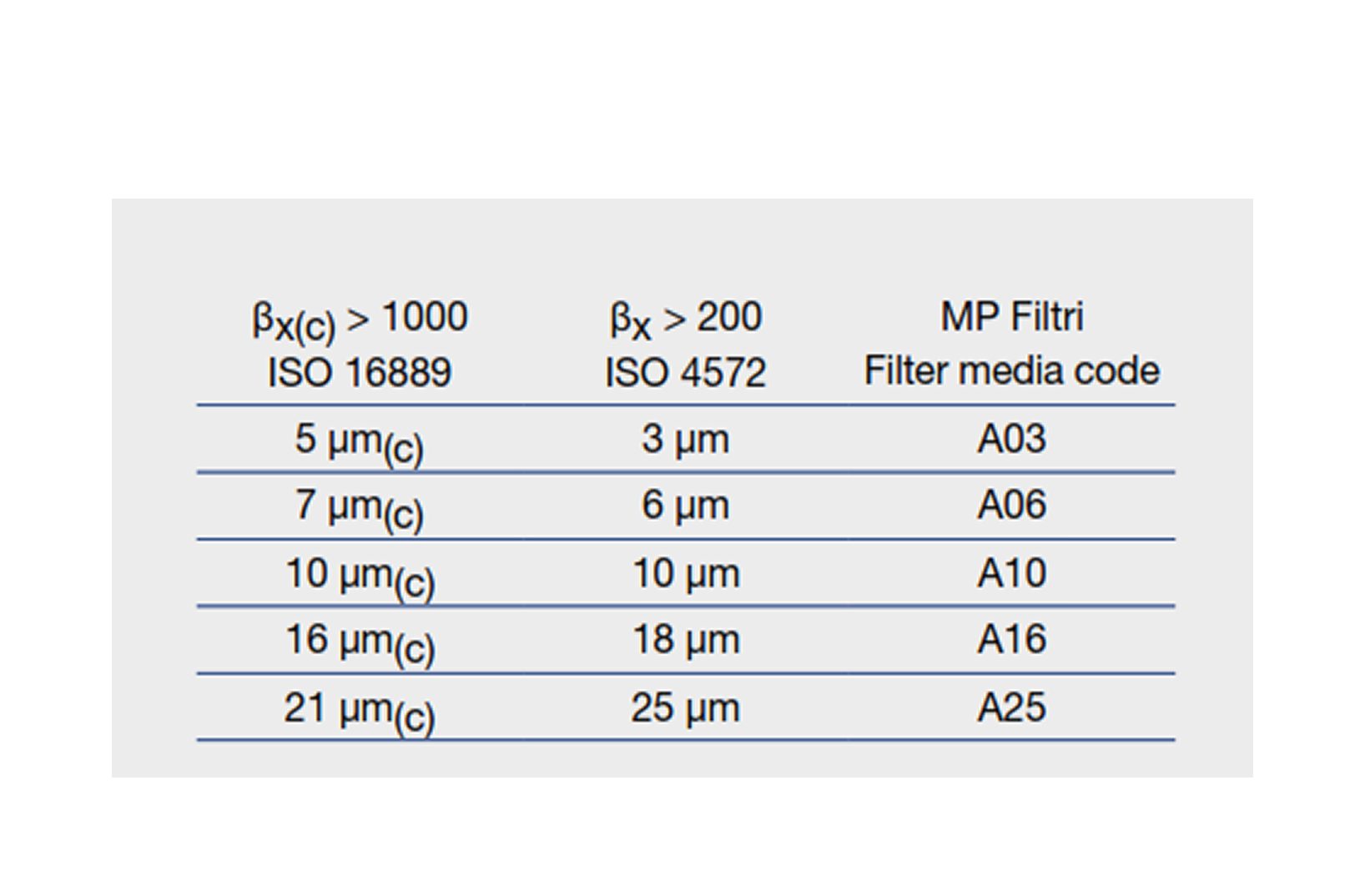
The table and graph below illustrates this point. The same “3 µm” filter element is 5 µm at the higher beta rating.
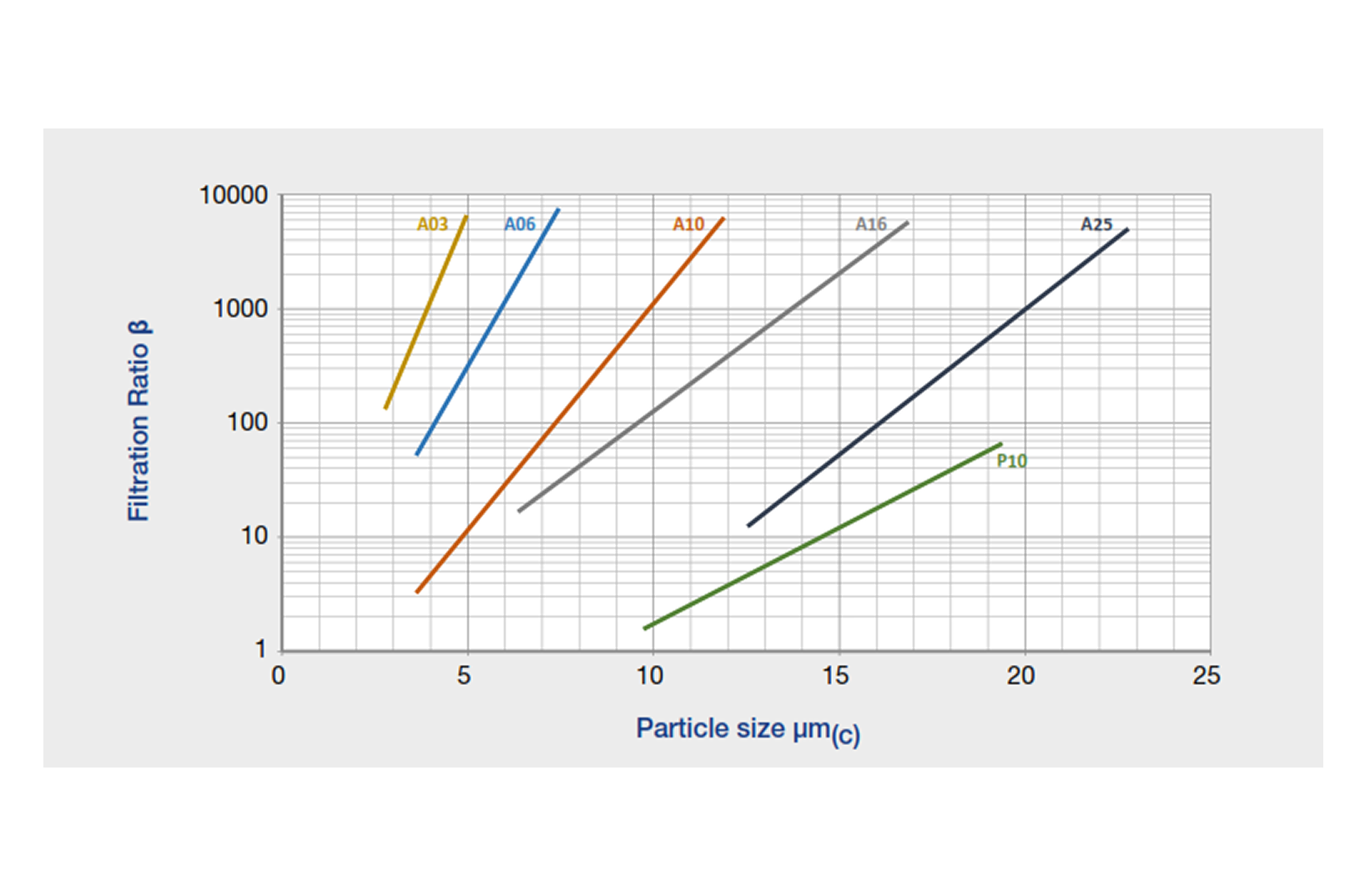
In conclusion, the same filter media can be communicated using multiple micron ratings at multiple efficiencies. For this reason, users are better served to focus on fluid cleanliness rather than a particular filter’s published efficiency.